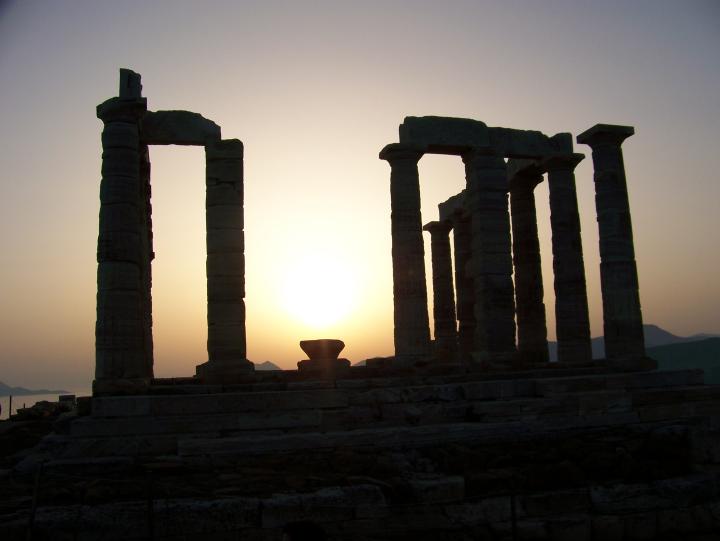
Sunset @ The Temple of Poseidon at Cape Sounion, Greece (June 2007)
The Temple of Poseidon was built on Cape Sounion to honor King Aegeus's memory and pay homage to Poseidon, the God associated with the sea and the protector of sailors. The temple served as a sacred site where seafarers and travelers would make offerings and seek Poseidon's favor before embarking on their voyages.
The Temple of Poseidon at Cape Sounion, Greece, was built around 444-440 BCE, during the time of Athenian statesman Pericles, who also oversaw the rebuilding of the Parthenon. It stands on the ruins of an earlier, Archaic temple that was destroyed by the Persians in 490 BCE. The temple was dedicated to the sea god Poseidon, reflecting the importance of the sea for the Athenians, a naval power, and their reliance on Poseidon's favor.
Key aspects of the temple's history:
Sacred Site:
Cape Sounion was considered a sacred area even before the temple's construction, possibly dating back to the Bronze Age.
Pericles' Building Project:
The temple was part of Pericles' ambitious building program, which also included the Parthenon and Hephaisteion.
Architectural Style:
The temple is a Doric peripteral temple, with 34 columns originally, each 20 feet tall.
Fortification:
During the Peloponnesian War, the temple area was fortified with walls and towers to protect it from the Spartans.
Symbolism:
The temple's location, high above the sea, made it a prominent landmark for sailors and a place where they would offer sacrifices to Poseidon for safe passage.
Cultural Significance:
The temple has inspired poets like Lord Byron and attracted visitors throughout history, highlighting its enduring allure.
Sunset Viewing:
The temple is particularly renowned for its stunning sunset views, making it a popular destination for tourists.