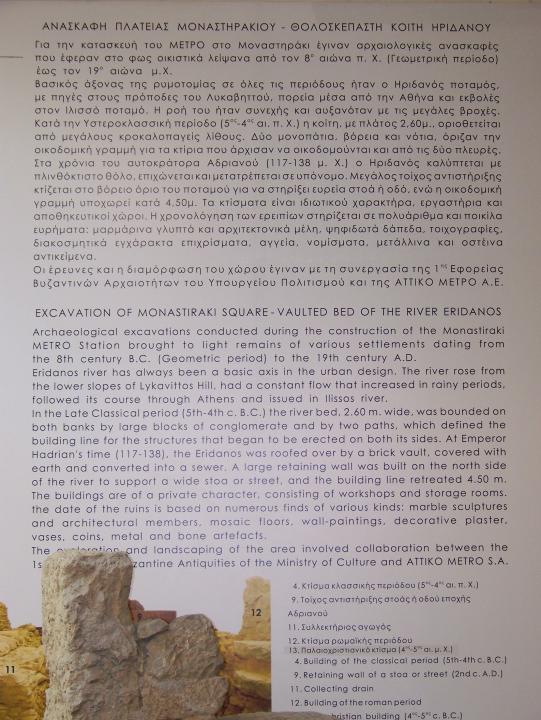
Excavation of Monastiraki Square in Athens, Greece (June 2007)
For the Metro construction in the area of MONASTIRAKI, archaeological excavations were carried out and residential remains came to light dating back to the 8th century BC (Geometric Era) up to the 19th century AD. The basic axis of the town planning in all eras was Iridanos River.
Monastiraki Square in Athens, Greece, has a rich history reflected in archaeological remains discovered during excavations, particularly those associated with the construction of the Monastiraki Metro Station. These findings include parts of ancient buildings, marble sculptures, mosaics, and various artifacts, providing a glimpse into the area's past as a residential and commercial hub.
Key aspects of the excavation and findings:
Metro Station Impact:
The construction of the Monastiraki Metro Station led to significant archaeological discoveries, revealing layers of the area's history.
Earthed Building Remains:
Excavations uncovered the ruins of various buildings, likely workshops and storage rooms, providing insights into daily life.
Artifacts:
Marble sculptures, decorative plaster, mosaic floors, vases, coins, and metal and bone artifacts were among the items found, offering a glimpse into the area's past.
Monastiraki's History:
The name "Monastiraki" itself is linked to a small monastery that existed in the square during Ottoman rule, highlighting the area's religious and historical significance.
Historical Significance:
Monastiraki Square has been a significant area in Athens for centuries, serving as a commercial and religious center. The presence of the Church of Panagia Pantanassa and the Tzistarakis Mosque (Ottoman-era) further emphasizes its importance according to Hellenic Vibes Smart Hotel and Nomadic Niko.
Today:
Monastiraki Square remains a vibrant area, known for its bustling flea market and as a popular spot for both locals and tourists.
Monastiraki Square is a bustling plaza in the heart of Athens, Greece, known for its vibrant atmosphere, historical sites, and proximity to major attractions. The square gets its name from a small monastery that once stood there. It's a popular meeting point and a hub for shopping, with the famous Monastiraki Flea Market nearby.
Here's a more detailed look:
Historical Significance:
The square sits on layers of history, with remnants of ancient rivers, a Byzantine church, and an Ottoman-era mosque according to YouTube creators. The Acropolis, visible from the square, is a short walk away.
Central Location:
Monastiraki is a major transportation hub, with a metro station providing easy access to the port of Piraeus and other parts of Athens according to YouTube creators. It's also a popular area for tourists to stay due to its proximity to many attractions.
Vibrant Atmosphere:
The square is always buzzing with activity, especially at night, with street performers, vendors, and lively cafes and restaurants. It's a great place to experience the energy of Athens.
Shopping and Dining:
Monastiraki is a shopper's paradise, with the flea market offering a wide range of souvenirs and unique finds. The surrounding streets are lined with shops, restaurants, and cafes, offering a variety of options for dining and entertainment.
Nearby Attractions:
Besides the Acropolis, other nearby attractions include Hadrian's Library, the Ancient Agora, and the Plaka district.