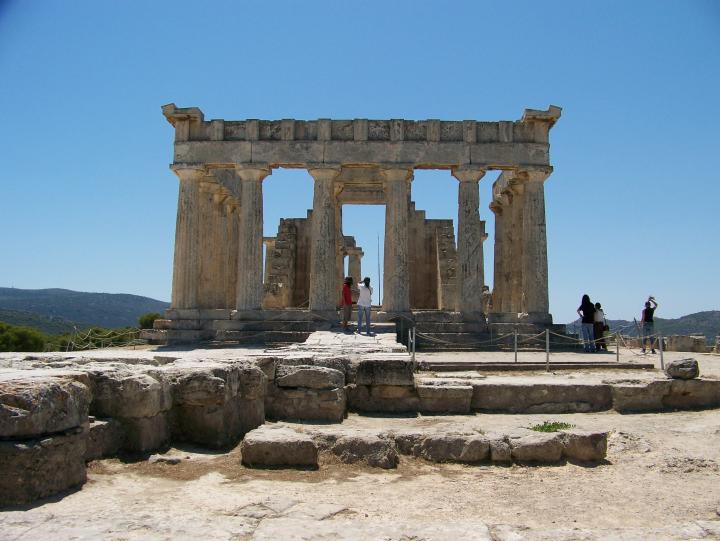
The Temple of Aphaia is on Aegina island in Greece (July 2007)
The Temple of Aphaia on the island of Aegina is historically significant as a well-preserved example of early Classical Greek architecture (circa 500 BCE), dedicated to a unique local goddess, Aphaia, who was considered a protector of the island. Its sculptural pediments show a pivotal shift from archaic to naturalistic art, depicting mythological scenes with advanced emotion and movement. The site was also a central hub for Aegina's cultural and religious life, symbolizing the island's power before its decline following Athenian dominance in the 5th century BCE.
Architectural and Artistic Significance
Early Classical Doric Style:
The temple exemplifies the foundational principles of Doric order architecture, showcasing a harmonious and balanced design.
Transition in Greek Art:
Its pedimental sculptures, including depictions of the Trojan War, are crucial for understanding the evolution of Greek art from rigid forms to more dynamic, naturalistic portrayals of movement and emotion.
Architectural Innovation:
The temple represents a significant development in Greek temple design, predating and influencing the later, more famous temples in Athens.
Religious and Cultural Significance
Unique Cult:
.
It was the primary and only sanctuary dedicated to the goddess Aphaia, a local deity important to the island of Aegina.
Pinnacle of Aegina's Power:
.
The construction of the temple occurred during Aegina's period of dominance and prosperity, serving as a symbol of the island's strength and cultural importance.
Site of Worship and Pilgrimage:
.
The sanctuary was a major center for religious activities and a site of pilgrimage, highlighting the connection between religion, art, and community.
Historical Context
Successor to an Earlier Temple:
The current limestone structure replaced an earlier temple built around 570 BCE that was destroyed by fire in 510 BCE.
Decline of the Sanctuary:
The importance of the Aphaia sanctuary diminished significantly after Aegina fell under Athenian control in the middle of the 5th century BCE.
Legacy Today:
The temple, despite being partially ruined, remains one of the most important archaeological sites in Greece, offering insight into ancient Greek religious practices and artistic achievements.